It's the day after Labor Day. As far as I'm concerned, today is the real first day of fall. Not September 22nd. Not the pumpkin spice release. Today. Summer is over, and everyone knows it, whether it's still 98' in your hometown or you're looking at the changing Aspens like I am today in Colorado.
The change of seasons is making me reflect on the summer this year in a new way. 99% of the time Tim and I are only thinking forward, never back, but today I'm more reflective.
Since "Amazon FBA Private Label Business Owner" was never at career day in 1999, I think you'd love to hear how our summer went if you are considering starting or have recently started your own product-based business.
"What does a normal day look like" has been a tough question to answer for us. Our roles and responsibilities have changed throughout the years, and "day to day" usually just means "whatever we have the energy for".
That's just it: we've had our foot on the gas as much as humanly possible for ourselves. Some of that is temperament — Tim more than me holds the pressure close to his heart, and neither of us is particularly gifted at sitting still. Some of it is context. When you're building the thing that's going to eventually let you leave everything else, you don't take days off in the way people with normal jobs take days off. There isn't a "day to day." There's just the next thing, and then the next one, for years.
From 2023 to 2025, that started looking a little more like what most people would call a "real business." We had two employees at Tripped. There were meetings on the calendar. There were structured hand-offs, email chains and projects with "check-ins". Weeks had shape.
And then by the end of 2025, feeling burnt out realizing that "a job as a manager" is far more challenging than "running a profitable business" for us, we made the decision to go back to solopreneurship.
2026 started by Tim transistioning from a today team of four, including me, to me stepping away as well to dive in here at FBA EDU and let him take stock of what was working, and to streamline everything back to "how we started".
So now, in year nine, it's Tim running and operating Tripped alone with some outside services (ads) and VAs and apart from some "owner's meetings" I really haven't been involved.
That brings you up to speed with what I actually want to write about.
For what feels like the first time in almost a decade, Tim has been intentional — aggressively intentional — with his rest time. Not in the productivity-guru sense. In the *what does this business actually need from me this week, and what doesn't it need* sense.
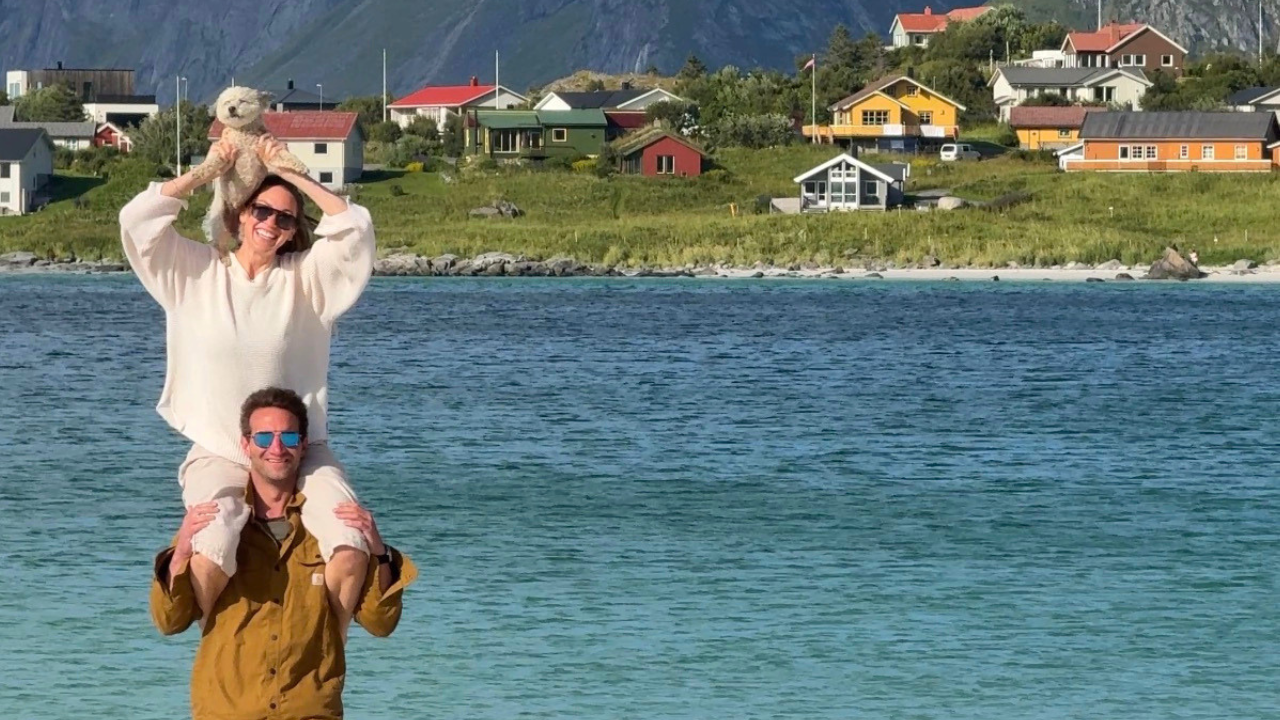
We took four weeks off this summer to travel through Norway and Ibiza. Tim didn't work.
I want to make sure that lands correctly, because it's a big deal.
For the first time in 9 years Tim didn't work.
The qualifier: ok wait hold on one second, we DID spend three of the four weeks filming our trip to Norway for our Tim and Fin YouTube channel. I guess filming for a passion project is his version of not working. That's fair to name. But the actual Amazon business, the actual running of Tripped, was left alone for a month. He hasn't fully outsourced customer service yet, so he checked in on a couple of specific customer issues while we were away. That was it. Four weeks. One product business. Almost entirely hands-off.
And it's not stopping there. Between now and the end of the year, Tim is taking his nephew to Laos in November. Then I'm meeting him in Raja Ampat for a scuba diving trip. Then he's doing a motorcycle trip in Argentina in December. And — I'm 90% sure at this point — we're going to Antarctica before Christmas.
Realistically that's another five weeks in the next 90 days, mostly offline, during what a lot of retail businesses would call *the season.*
Nine years in, this is the first honest impression we've had of what *running* an Amazon business — as opposed to *building* one, or *growing* one — actually looks like.
Here's what I've learned watching this play out.
It isn't that time investment doesn't matter. It does. There's no version of year one, or year two, or year three where we could have run the business the way Tim is running it now and seen the growth that we did ($1M, $5M, $10M). The years of building are exactly what made the current phase possible.
But it also isn't true that *more time = more growth,* which is what most business advice tells you. There are levers you can pull to grow a business, and there are levers that only *look* like growth levers. If you're pulling the wrong ones, all you're doing is running in place — or worse, keeping up with whatever your industry's baseline growth (or decline) happens to be.
The travel industry is down this year. Consumer spending on discretionary travel gear is down. We're going to come in under $10M in revenue in 2026, and honestly, we're fine with it.
We're fine with it because for that reduced time investment — one person, 10 weeks off already this year, another five before Christmas, half a dozen international trips — the trade is exactly what we would have taken every time if you'd offered it to us at the beginning.
So to finally answer the question "what does it look like running an Amazon business?" Well, I guess, this is the first year we're finding that out. Every other year we were never interested in that - only "how do I best grow this Amazon business" was all we were ever interested in.
Cheers to October, which will mark the nine-year anniversary of when Tim quit is $27,000/year sales job because we were consistently making $100/day profit on Amazon. We now have had at least 100 days in our business doing $27,000 profit.
And to the first day of fall, whether the calendar admits it or not.
Fin
FBA EDU