I want to tell you about our first product, because it's a really specific kind of cautionary tale.
It sucked.
Ok I'm being a little dramatic, here's what a I mean-
Our first product didn't suck because the product sucks - in fact, the product is so great we actually still sell it today!

It's a backpack that compresses down into a little pouch. It's genuinely useful for travel. It's my favorite daybag on a trip - it's water resistant, does great in light rain or on a snorkel boat.
So what's the problem?
The problem was that the only people who bought it were the people who already knew us.
Let me back up.
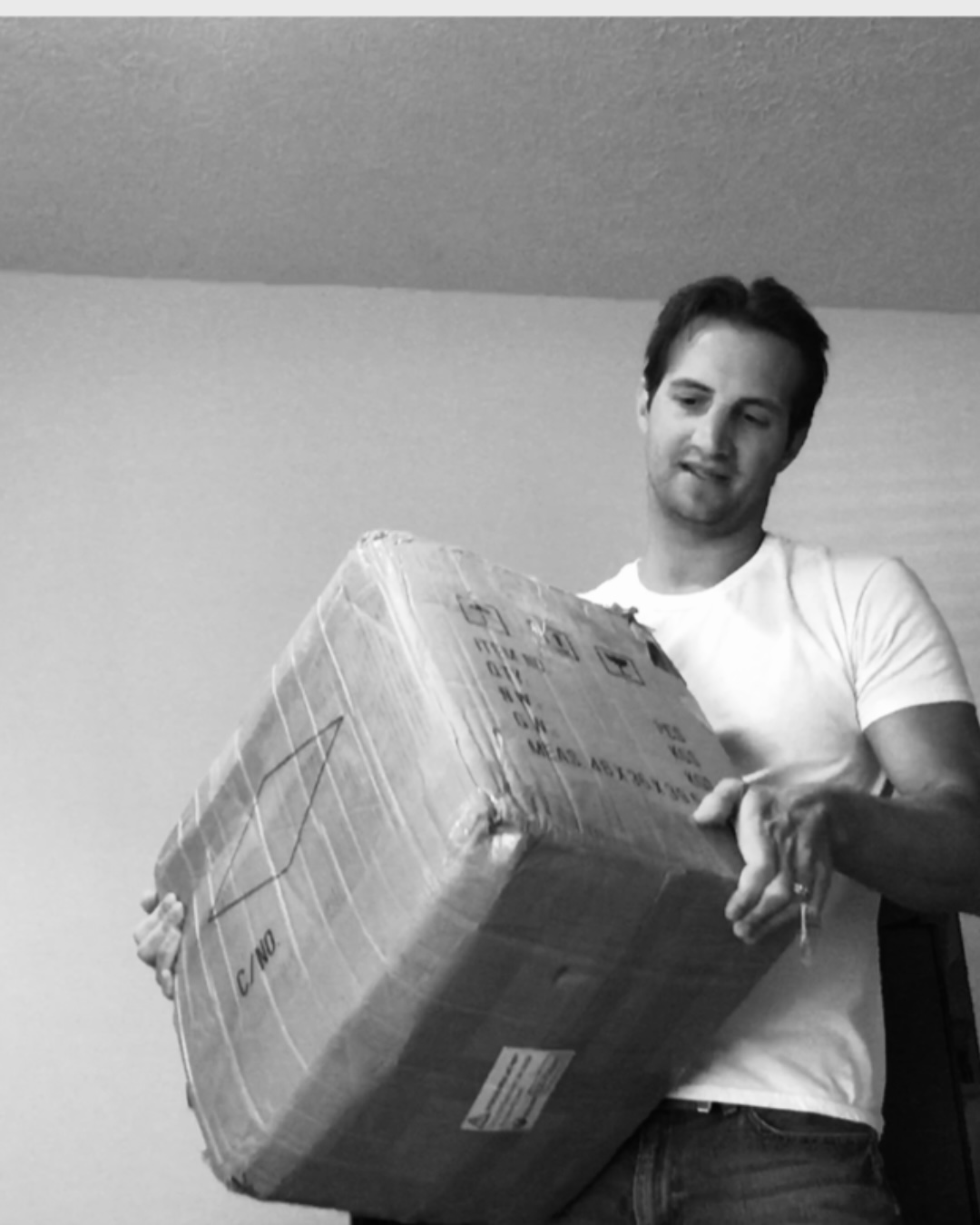
When Tim and I first decided to start an Amazon business in 2017, we had no idea what we were doing. Tim was following the steps of this really overpriced course, it mentioned to start your first product with something lightweight and easy to ship.
We'd just spent eleven months traveling around the world, so we thought — obviously — we'd start with something travel-related. That was the entire framework.
Tim found this backpack on Alibaba he thought was cool. We thought we would've liked it on our trip. Jungle Scout (product research tool) showed some promising numbers? That people out there buy backpacks - okay great - the supplier could do it in his favorite color, orange. What else does a business idea need? We placed an order.
It launched. We shared about it to our 2,000 person YouTube channel, 15 people bought it. We were briefly thrilled.
Every single sale was someone who already followed us. Was it awesome we had a tiny audience to launch this to? Hell yeah. They loved it. They left great reviews. They told their friends. It looked, for about three weeks, like we'd done it.
We hadn't done anything.
On Amazon, where the *actual* customers live, nobody could find it. Nobody was searching for what we were selling. The ads we ran burned through cash without converting because there was no demand we were tapping into — only demand we were *creating* among the few hundred people who already trusted us. That's not a business. That's merch.
Here's the trap, because it's the one almost every first-time founder falls into, and it's worth naming clearly so you can see it coming.
The trap is: *cool product + I'd buy it + my friends bought it = real business.*
It's not. It's never been. And the reason it feels like a business in the early weeks is that your existing audience — even a tiny one, even five thousand YouTube subscribers, even three hundred Instagram followers, even your mom's book club — will buy almost anything you sell, especially in the first month, especially if you ask nicely. That early support is real and beautiful and means a lot. It is also *not market validation*. It's *relationship validation*. Different thing entirely.
Why am I sharing this?
The point is that we thought having a YouTube channel is what was going to help build our business.
It wasn't.
So what does?
What we should have asked before we sourced a single unit:
*Who is searching Amazon for this product right now? How many of them? What are they currently buying instead? Is there room for us in that category, or is it dominated by sellers who already have years of reviews? Can we engineer enough margin into this product to fund the advertising we'll need to break through to people who've never heard of us?*
We asked exactly zero of those questions. We just thought the backpack was cool.
This is the *passion-product trap*, and it is the single most common reason first-time Amazon businesses fail. Not because the product is bad. Not because the founder is lazy. But because the founder built the business around what *she* finds compelling, then validated it against people who already love her, and concluded the market loves it too.
The market doesn't know you exist yet. The market doesn't care that the backpack is orange or that you would have liked it on your trip. The market is looking for a solution to a problem it already has, and it's typing keywords into a search bar to find it. If those keywords don't lead to your product, your product doesn't exist, no matter how cool it is.
If your friends or followers are buying your product, you don't have proof of concept. You have proof of friendship. Those are not the same thing, and confusing them is the most expensive mistake you can make in the first year.
Curious what did actually work?
Check out the next article ;)
Fin
FBA EDU