Last article, I told you about our first product — the backpack that the only people who bought it were people who already knew us.
We didn't quit there, obviously. But our second product wasn't the breakthrough either.
The breakthrough was our third, and the *gap* between products two and three is the most important business lesson Tim and I ever learned.
So this email is a Goldilocks story. Product one, too cold. Product two, almost. Product three — just right.
Let me tell you what changed each time.
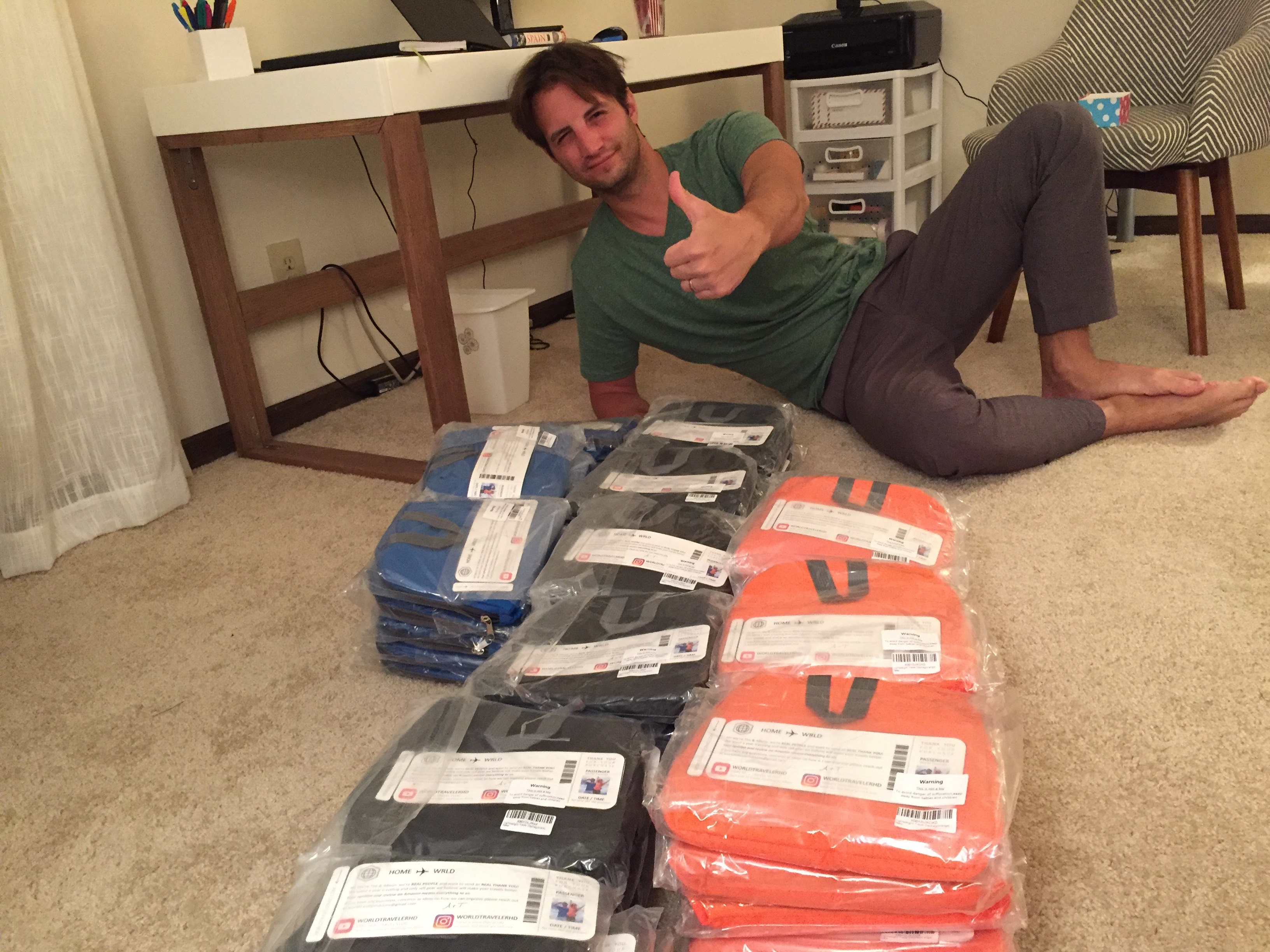
Product One: Backpacks.
We already covered this. We picked a backpack because Tim thought it was cool, we'd just come back from a year of travel, and we thought we'd have liked it on the trip.
We had no expertise in the backpack category beyond having owned one. We had no way to differentiate ours from the forty thousand other sellers offering basically the same thing. The category was a commodity and we were a commodity inside it. It sucked.
But here's the thing about that failure: it taught us not to pick a product because *we* thought it was cool. It also taught us we were going to need a real reason for the customer to choose ours over everyone else's. Without that reason, there is no business.
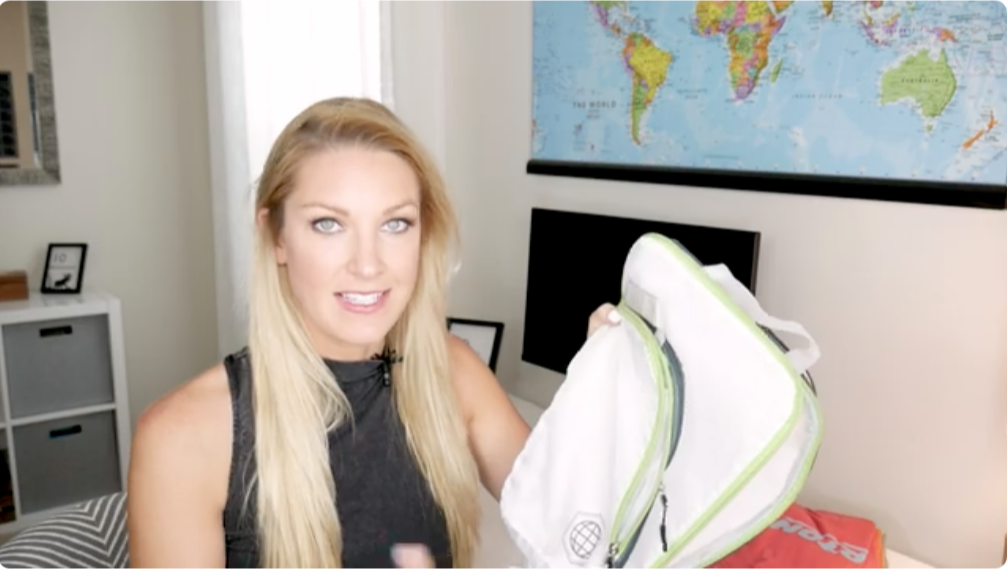
Product Two: our own version of a product we knew better.
Here's where it gets interesting, because we did almost everything right and it still wasn't the breakthrough.
For our year-long honeymoon, Tim and I had lived out of a single two-piece Eagle Creek compression packing cube set. Every single day, every single clothing item, in or out of those cubes. We knew them intimately. We knew exactly what we loved about them, exactly what was overpriced, exactly what could be made better.
We were, conservatively, in the top 0.01% of users of that specific product category on the planet.
So for our second product, we made our own version. Higher quality fabric. Better zippers. Same two-piece configuration. We priced it competitively against Eagle Creek and other premium brands.
It did okay.
No one was quitting a stable income over this, and sure, this could have sat as a "side-hustle" for years and years.
For us, that wasn't enough.
This is the part that took us a few months to figure out.
Having the expertise wasn't the whole answer. We had to use the expertise to do something the existing market wasn't doing — not just *make a better version of what already existed*,
but solve a problem the existing products weren't actually solving.
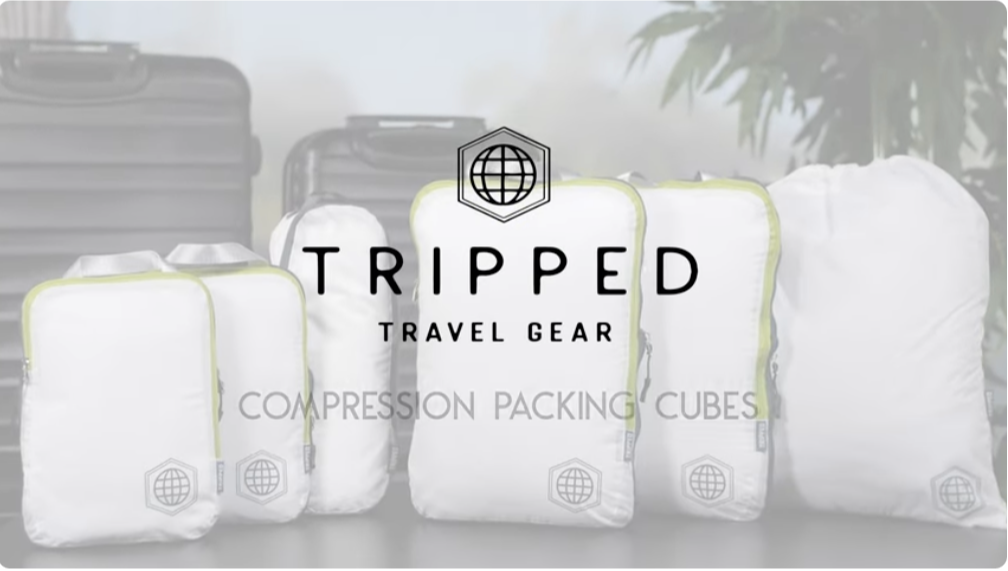
Product Three: the 6-piece carry-on system.
We stopped asking "how do we sell better packing cubes?" and started asking *what problem are people really trying to solve when they buy packing cubes?*
The answer was bigger than we'd realized. Compression packing cubes had originally been designed for overnight backpackers — hikers compressing sleeping gear into a frame pack. But by 2018, a completely different group of people was buying them, in much larger numbers, for a completely different reason.
The airlines were charging more and more for checked bags. Then they started charging for *carry-on* bags. Suddenly, efficiently packing for vacation in a carry-on was a real, urgent, expensive problem for millions of travelers.
Compression packing cubes were the answer. But nobody was selling them *that way*. The category was still merchandised the way it had been ten years earlier — individual cubes, set of two, generic descriptions, no acknowledgment of the actual problem the customer was trying to solve.
So we designed a set of six. Engineered specifically to fit perfectly inside the standard carry-on suitcase. The customer who bought it wasn't just getting packing cubes. She was getting *certainty her stuff would fit in the carry-on* before she ever zipped the suitcase. Put everything inside the cubes. If it fits in the cubes, it fits in the suitcase. Done.
That one reframe — from "better packing cubes" to "a carry-on packing system" — was the difference between a modest product and a million-dollar product. Same fabric. Same zippers. Same materials. Completely different value to the customer.
That's the product that built Tripped. That's the product that hit $1M in three years and crossed $10M years later. Not the backpack. Not the better-cube. Not the fact that since 2019 we've added more products into our line - the one where we used our lived expertise to *redefine the category for the customer*.
There's a methodology behind this that I now teach (The MUSE Method) — I'll get into it in future issues.
For now, what I want you to take from this email:
Your expertise is the starting point, not the finishing line. Knowing a product category deeply isn't enough to build a business on. You have to use that knowledge to *redefine the problem the product is solving* in a way the existing market hasn't. That's the move that creates a category of one. Without it, you're just a slightly-better version of what's already there.
And — here's the pin in this whole story.
People routinely assume Tim and I built this business because we had a YouTube channel. I want to set the record straight.
When the 6-piece carry-on set launched, the YouTube channel had a few thousand subscribers. Functionally nothing. The vast majority of our customers were complete strangers who searched "carry-on packing cubes" on Amazon, found our listing, and bought because it solved their problem better than anything else on the page.
Here's what we figured out, years later, after the YouTube channel had grown we actually started realizing that people were finding us on YouTube from the packing slip thank you note after buying one of our products.
Which means: when people assume our business worked because we have an audience, the causation in their head is exactly backwards. The product worked. *Then* the audience came. Because the product worked.
You do not need an audience to do this. You need a product that solves a real problem for a real market that's already searching for the solution. That's the whole game. Everything else is a byproduct.
Fin
FBA EDU
P.S. Have you ever caught yourself thinking *I could never do that, I don't have a following?* That's the influencer-model assumption sneaking in based on the scrolling that you're doing.