There's a thing most people don't realize about starting a business, and it's the thing that should drive every decision about *which* business to start.
Most online business advice treats all income the same. Make money online. Replace your salary. Earn from anywhere. The promise is always: swap your paycheck for a new way of getting paid.
Cool, don't get me wrong, that was an awesome message to hear in 2015.
But now, after running a YouTube channel for 11 years, freelancing, online consulting, and building a product-based business, we can tell you - it's not all created equal.

There are two completely different kinds of income, and only one of them does what most people think they're chasing when they leave their job.
That distinction is the difference between owning a house and renting one.
Let's run the comparison.
If you're a salaried employee, you earn a paycheck every two weeks. It's reliable. It pays the bills. The day you stop showing up, the paycheck stops. Forty years of salary later, you have whatever you saved — but the *job itself* is not something you can sell or pass down or borrow against. You rented your career to your employer in exchange for income. There's nothing to show for it at the end except what you happened to put aside.
Cool, great, wonderful.
Then, we all wanted the freedom of "working from anywhere" or, at the very least "home".
You could be a freelancer or consultant and then the trade is the same with slightly better terms. You charge more per hour, you keep more of it, you have flexibility. But the moment you stop taking clients, the income stops. Forty years of freelancing later, you also have whatever you saved — but the *practice itself* is rarely sellable. Freelance businesses depend on you specifically.
If you're an influencer or content creator, it's actually the same story with extra steps. You spend years building an audience (typically without getting paid). You'll then finally start to earn from brand deals, sponsorships, affiliate links, ads on your account, or maybe you'll offer a digital product. It can be lucrative - eventually. But the audience produces income only as long as you keep producing content.

The day you stop posting, the algorithm punishes you and the brand deals slow. The audience itself is not technically yours — it's renting attention from Meta or Google or TikTok, and they can change the terms anytime. Again, forty years later: you have whatever you saved.
Look at any of your favorite influencers, and what are they doing now that they have all this success of 1M followers?
They probably started - a business.
That's because none of those models has the multiplier nobody talks about.
The multiplier is *the sale of the business itself*.
A real product brand — the kind built around a product that solves a real problem for real customers in a marketplace with built-in demand — is fundamentally different from any of the above. The business has reviews, search rankings, customers, infrastructure, brand recognition, supplier relationships, repeatable revenue. It exists separately from you. And because it exists separately from you, *someone else can buy it from you*.
We love building this type of business on Amazon because there's 200+M customers built into the platform AND you don't have run your own warehouse.
Run properly, with enough margin and enough years behind it, a product business on Amazon sells for somewhere between 2x and 5x its annual profit. A business clearing your same $200K salary in profit per year is worth somewhere between $400K and $1M when you sell it. A business clearing $500K in profit is worth $1M to $2.5M. That money lands in your account in one lump sum and you walk away.
That's the multiplier.
That's the thing the salary doesn't give you. The thing the freelance practice doesn't give you. The thing the influencer audience doesn't give you. They all produce income while you work. None of them produce a sellable asset when you're done.
A product business does both. The years of income while you build it, *and* the lump sum when you sell it.
That's The Exit (get it?).
The most successful influencers and creators you can name eventually figure this out. They build the audience first, get tired of renting income from algorithm trends, and then launch a physical or digital product line separate from their own name.
Practically every creator you've followed for more than five years has either started a another business. They all eventually convert their rented income into an owned asset, because they reach a moment where they realize the rented income was never going to give them what an owned business will.
Most of you reading this don't have an audience and aren't trying to build one. That's actually an *advantage*. You get to skip the audience-building rent phase and go straight to building the asset.
The Amazon marketplace is one of the few business models in 2026 where this is possible without millions in venture capital, without a personal brand, without years of audience-building.
You can build the asset directly.
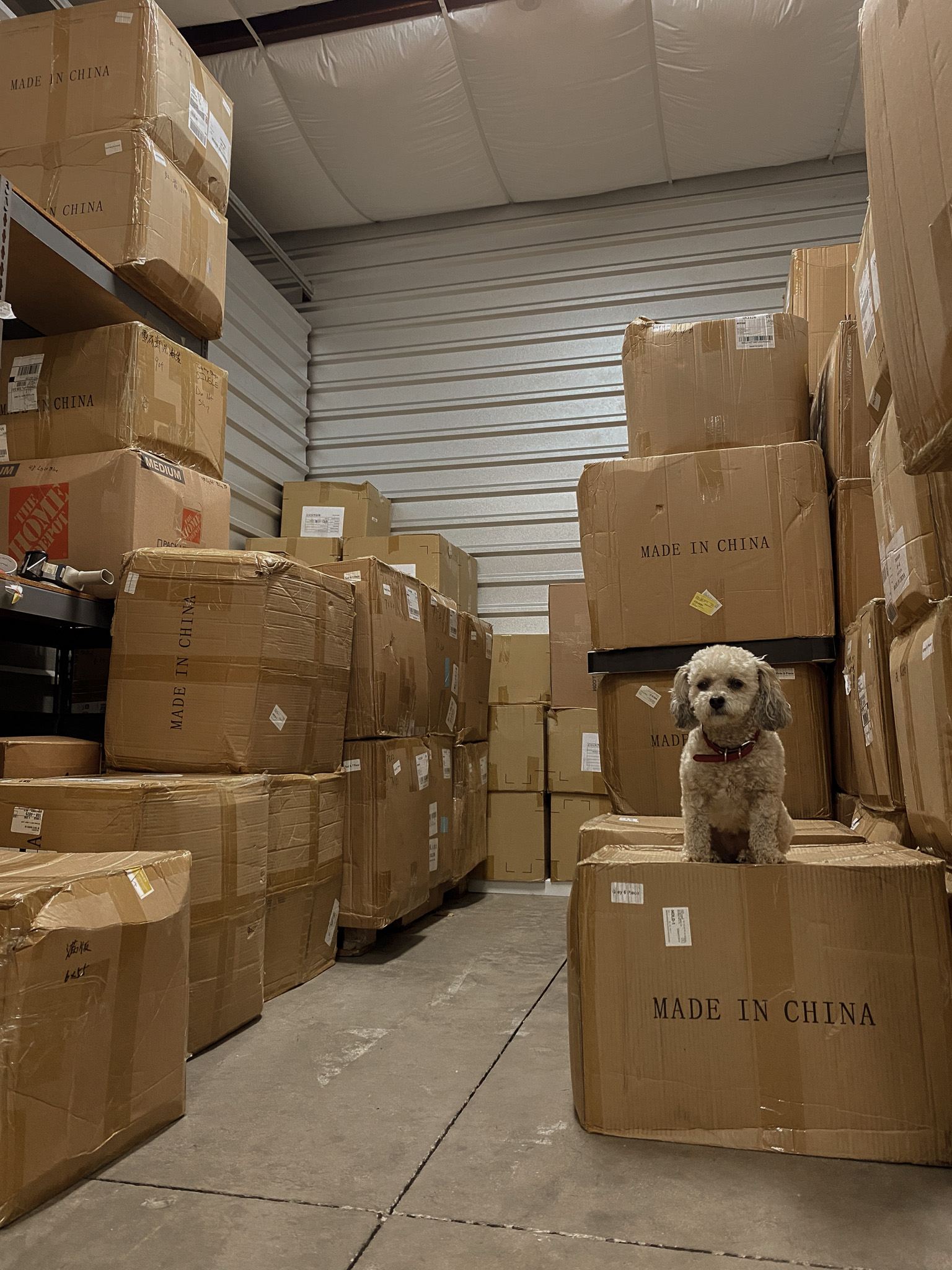
If you've been wondering why Tim and I have been preaching this specific business model and not about all the other ways to make money online, that's why.
There's no point in trading one rented income for another. The whole point of leaving is to own something. The whole point of building is to build something *that exists when you're done building it* — and then, eventually, hands you a check on the way out.
We spend an entire chapter of The Founder's Journal walking through this — the comparison of online business models, what each one trades, where each one ends up after five years. The argument I just made is the short version. The Journal version goes deeper into the math and the trade-offs of each model, with the goal of giving you the language to be sure about what you're actually building (or, just as important, what you're choosing *not* to build).
Fin
...and a short note about us, since we're talking about the exit:
Yes — the goal one day is to sell Tripped. The business has been cash-flowing a life beyond what we could ever imagine for years now (the income half of the equation, very real, very life-changing). But we've also always known the second half of the equation is the actual finish line — the day someone else writes us a check for what we built, and we walk away with a number that changes our lives again, in an entirely different way.
That's what we're working toward. We haven't made that choice to sell yet. When we do, I'll tell you about it here first. 😉